Ask a Turkish person what the country does better than anywhere else and there is a good chance the answer will not be kebab or baklava. It will be breakfast. Kahvaltı is not a quick refuel before the day starts here — it is a meal with its own vocabulary, its own restaurants, its own weekend rituals and its own arguments about who does it best. For a visitor, understanding Turkish breakfast is one of the fastest ways to understand the country.
This guide explains what a Turkish breakfast actually consists of, what the items on the table are called, how tea fits into it, when and where to eat it in Istanbul, and how to get the most out of the breakfast included with your stay. If you are planning your first mornings in the old city, this is the meal to plan them around.
What a Turkish Breakfast Actually Is
The word kahvaltı literally means “before coffee” — kahve altı — a reminder that this meal comes first and coffee comes later. What arrives on the table is not one dish but many small ones, laid out at the same time and eaten slowly, in whatever order you like. There is no starter and no main course. You build each mouthful yourself: a piece of bread, a slice of cheese, an olive, a spoon of jam, a bite of cucumber.
That structure is the point. A proper Turkish breakfast is designed to be shared and to take time. On a weekend, a family can sit at the table from ten in the morning until one in the afternoon, refilling the tea glasses, picking at what is left, and talking. The Turkish phrase for the full spread is serpme kahvaltı — “scattered breakfast” — and in a restaurant it usually means the table disappears under twenty or more small plates.
Hotel breakfast in Turkey follows the same logic in buffet form. Instead of plates arriving at your table, the same range of components is laid out for you to assemble, which means a good hotel breakfast here looks very different from a continental one: cheeses and olives outnumber pastries, there is always cucumber and tomato, and there is always tea.
What You Will Find on the Table
The core of a Turkish breakfast is fairly consistent across the country, with regional additions on top. Expect most of the following:
- Beyaz peynir — the white brined cheese that anchors every breakfast table. Salty, crumbly, somewhere between feta and a fresh curd.
- Kaşar — a firmer yellow cheese, milder, good on bread. Aged kaşar (eski kaşar) is sharper.
- Olives — both black (siyah zeytin) and green (yeşil zeytin), usually served in separate bowls and often dressed with olive oil and oregano.
- Tomatoes and cucumbers — sliced, unseasoned, and non-negotiable. They are there to cut through the salt and the fat.
- Bal kaymak — clotted buffalo cream with honey poured over it. The single most indulgent thing on a Turkish breakfast table and, for many people, the reason to have one.
- Reçel — homemade jams, often more than one: sour cherry, rose petal, fig, apricot.
- Tereyağı — butter, usually served plain alongside the honey and jam.
- Eggs — boiled, fried, or cooked into menemen or sucuklu yumurta.
- Sucuk — spiced dry beef sausage, fried until the edges crisp.
- Pastırma — air-dried cured beef coated in a paste of fenugreek, garlic and paprika. Intense, sliced very thin.
- Börek — layered pastry filled with cheese, spinach or minced meat.
- Simit — the sesame-crusted bread ring sold on every street corner.
- Çay — black tea, endlessly refilled, in a tulip-shaped glass.
Cheese, Olives and the Art of the Small Plate
If you are new to this meal, the number of plates can be confusing. The trick is to stop thinking of them as separate dishes and start thinking of them as ingredients. A classic combination is a piece of bread with beyaz peynir, a slice of tomato and a drizzle of olive oil, eaten in one bite. Another is kaşar with a spoonful of sour cherry jam — salt against sweet, which sounds wrong and is not.
Turkey produces an enormous range of regional cheeses beyond the two staples: örgü peyniri, the braided cheese from Diyarbakır; tulum, matured in a goatskin; çeçil, pulled into fine threads; van otlu peyniri, studded with wild herbs. A good breakfast spread in Istanbul will usually include at least one of these alongside the standards, and they are worth asking about.
Eggs: Menemen, Sucuklu Yumurta and Beyond
Eggs at a Turkish breakfast are rarely plain. The two dishes you will meet most often are worth knowing by name.
Menemen is eggs cooked slowly with tomato, green pepper and often onion, until the mixture is soft and just set — closer to a loose scramble than an omelette. It arrives in the small copper or cast-iron pan it was cooked in, still bubbling, and it is eaten straight from the pan with bread. Whether onion belongs in menemen is a genuine national argument; both camps are firmly held.
Sucuklu yumurta is sucuk fried until the fat renders and the slices curl, with eggs cracked in on top. The paprika and cumin in the sausage colour the whole pan orange. It is heavier than menemen and better if you have a long day of walking ahead.
You will also see kaygana, a herb-heavy flat omelette, and simply boiled eggs, which every buffet keeps in a warm tray.
Tea, Not Coffee: Why Çay Rules the Breakfast Table
Despite the meal’s name, Turkish coffee is not a breakfast drink. It comes after breakfast, or mid-morning, or after lunch. What you drink with breakfast is çay: black tea grown on the Black Sea coast near Rize, brewed in a stacked double kettle called a çaydanlık, and served in a small tulip-shaped glass so you can see the colour.
You will be asked how you want it. Açık means diluted and light; koyu or demli means strong and dark; tavşan kanı — “rabbit’s blood” — is the ideal, a deep clear red. Sugar comes as cubes on the saucer, and milk is not offered and not expected. Refills are constant and usually free at a proper breakfast place; you signal that you have had enough by leaving your spoon across the top of the glass.
If you want Turkish coffee afterwards, order it sade (no sugar), az şekerli (a little), orta (medium) or şekerli (sweet), and let the grounds settle before you drink.
Breakfast at Dalan Hotel in Laleli
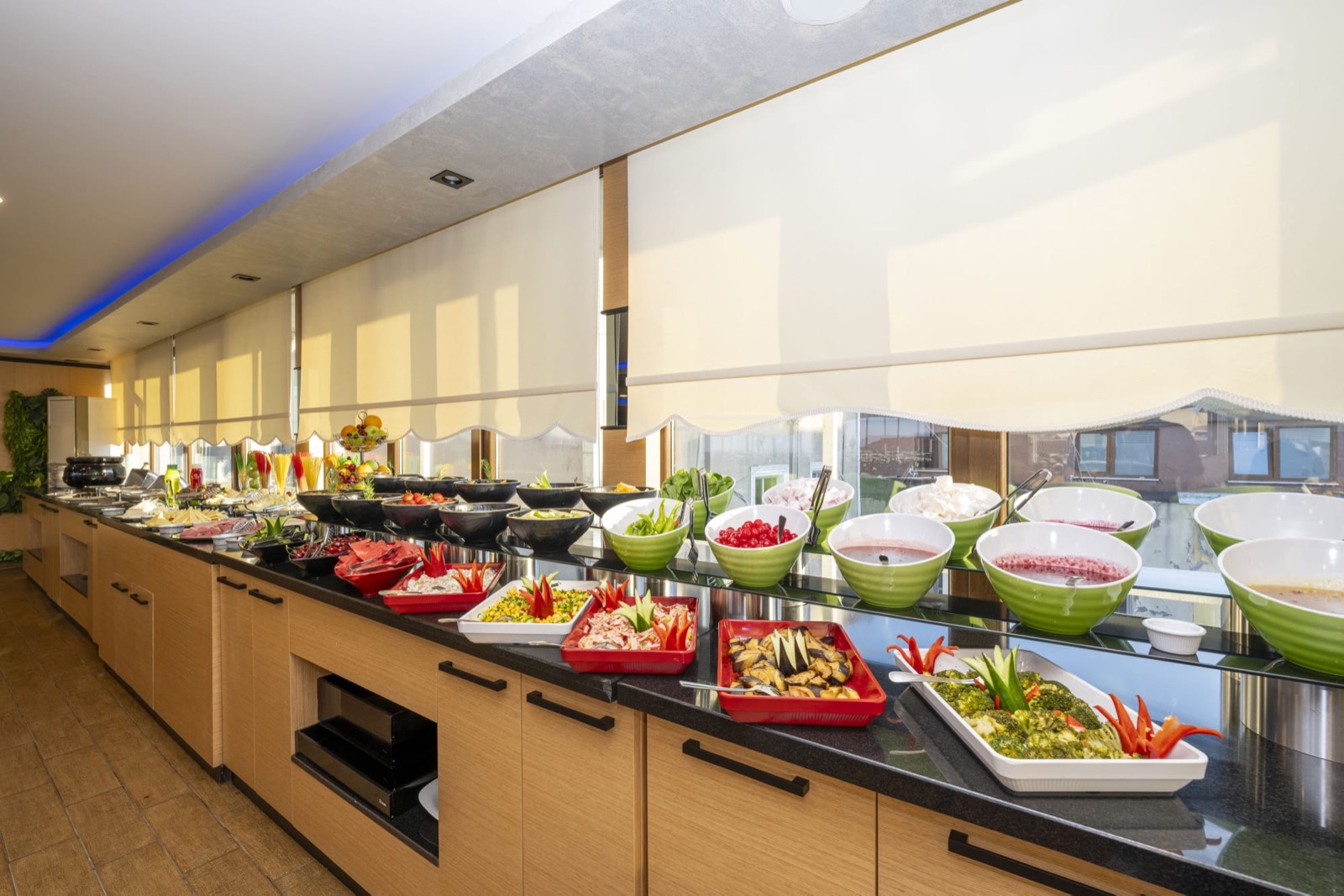
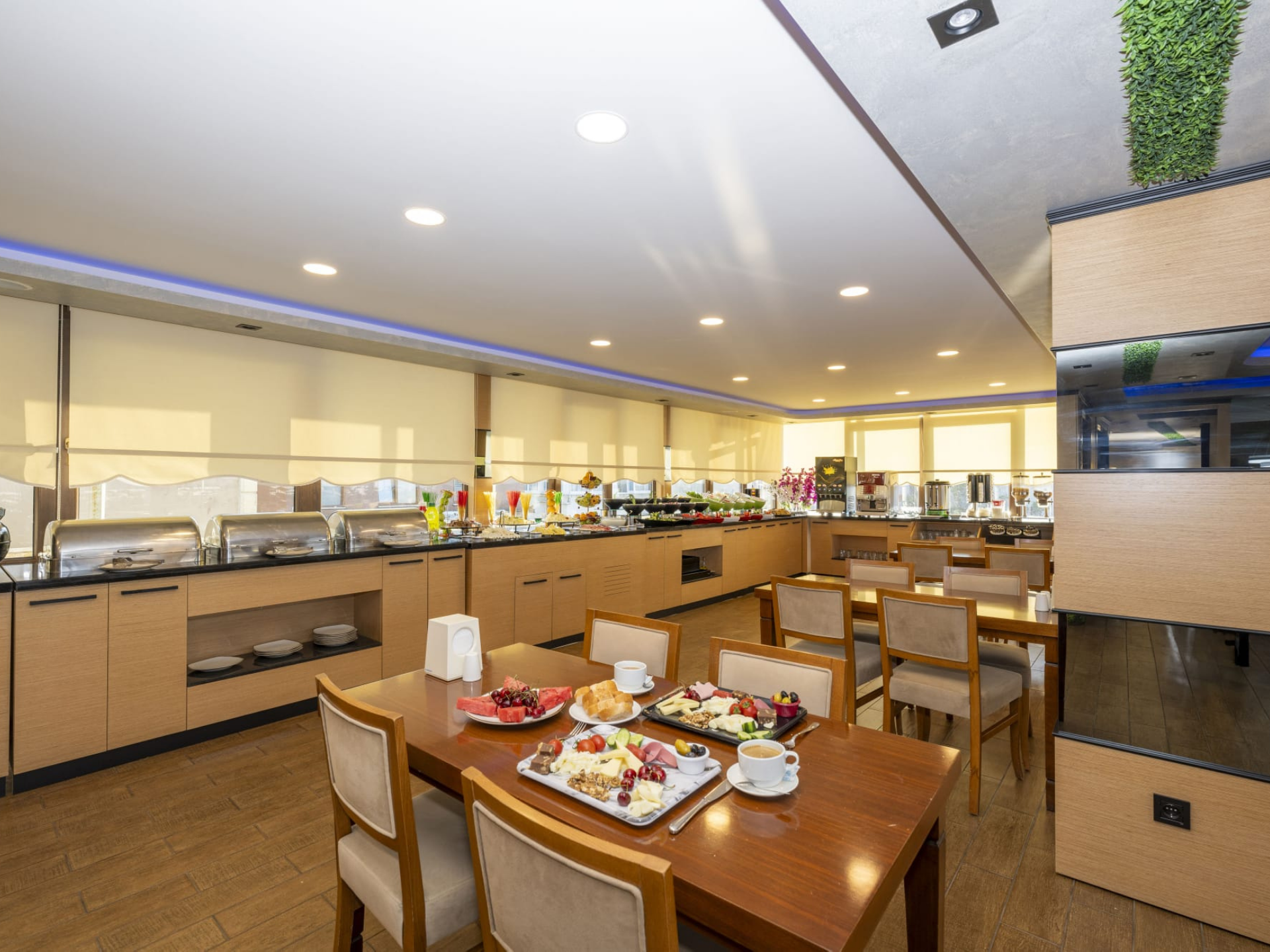
Breakfast at Dalan Hotel is served as an open buffet in the ground-floor salon, and it is built around the same components a Turkish family would put on the table at home: several cheeses, black and green olives, cucumber and tomato, eggs, cold cuts, fresh bread, pastries, honey and jams, fruit, juices, and a çaydanlık of tea that keeps going. Coffee is available for guests who cannot start the day without it.
The salon opens off the lobby on the ground floor, which makes the morning routine simple: down in the lift, breakfast, and out of the front door onto Azimkar Sokak. Because the hotel sits on a quiet side street rather than on the main road, the room stays calm even when Laleli’s shopping streets are already busy — something guests mention often, and a theme we have written about before in our piece on why light sleepers tend to prefer this part of Laleli.
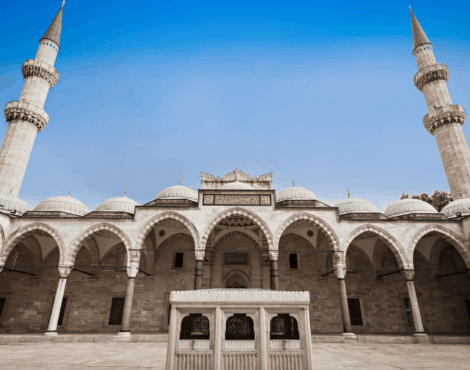
A practical note on timing: breakfast is served early enough that you can eat and still be at the Grand Bazaar or Süleymaniye before the first tour groups arrive. If you are working to a tight schedule, our three-day Istanbul itinerary assumes an early breakfast and builds each day around it.
Where Else to Eat Breakfast in Istanbul
Turkish breakfast as a restaurant meal is its own industry in Istanbul, and if you have a free morning it is worth seeking out a full serpme spread rather than eating at the hotel.
- Beşiktaş breakfast street (Kahvaltıcılar Sokağı) — a short run of breakfast houses packed with locals on Sunday mornings, generous and reasonably priced.
- Bebek and Arnavutköy — Bosphorus-side cafés where breakfast comes with a water view and a higher bill.
- Moda, on the Asian side — a relaxed neighbourhood full of breakfast places, reachable by ferry from Eminönü or Karaköy, and a good excuse for a boat ride.
- Van kahvaltı evleri — breakfast houses specialising in the eastern Anatolian style, with herbed cheese, kavut, murtuğa and honeycomb. Several operate in Beyoğlu.
- Around Laleli and Aksaray — plenty of small esnaf lokantası and bakeries serving börek, poğaça and simit from early morning if you want something quick. Our guide to exploring Laleli covers the neighbourhood’s food and shopping streets.
Prices vary widely. A neighbourhood breakfast house will do a full spread for two at a fraction of what a Bosphorus terrace charges, and the food is often better.
After Breakfast: Where to Go First

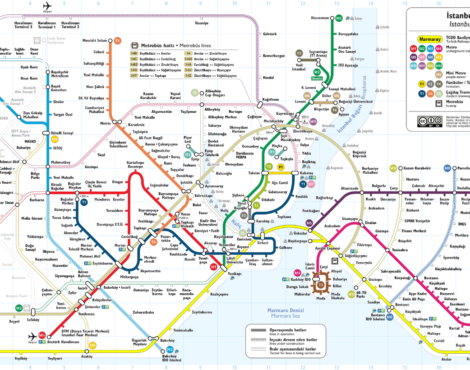
One of the practical advantages of eating breakfast in Laleli is that the T1 tram runs along Ordu Caddesi, a few minutes from the hotel door. From the Laleli-Üniversite stop you are two stops from the Grand Bazaar and four from Sultanahmet, which means you can finish your tea and be standing in front of Hagia Sophia in about fifteen minutes.
Going early matters more than most visitors expect: the major sites are noticeably quieter in the first hour after opening. Our public transport guide for visitors explains how to load an Istanbulkart, and our roundup of the ten must-see landmarks near Sultanahmet lists what is worth reaching first.
Breakfast Etiquette and Timing
A few things that will make the meal easier:
- Timing. Turks eat breakfast late on weekends — anywhere from ten to noon. Many dedicated breakfast restaurants do not open before nine, and some serve breakfast until mid-afternoon.
- Sharing. A serpme spread is priced per person but served for the table. Ordering one portion for two people is not normally allowed, and the quantity is generous.
- Bread. It keeps coming and it is not charged separately. Use it as a utensil.
- Pace. Nobody will rush you or bring the bill until you ask. Sitting for two hours is normal.
- Dietary needs. Vegetarians do very well here: remove sucuk and pastırma and the meal is still complete. Vegans have a harder time, since cheese, butter, honey and eggs carry most of the table, though olives, vegetables, jams, bread and tea are always available.
Frequently Asked Questions
Is breakfast usually included at Istanbul hotels?
In most mid-range and boutique hotels in the old city, yes, and it is normally an open buffet in the Turkish style rather than a continental one. It is worth confirming when you book, since a few properties price it separately.
What is the difference between kahvaltı and serpme kahvaltı?
Kahvaltı is the meal in general. Serpme kahvaltı is the full restaurant version, where the whole range of small plates arrives at once and covers the table. A hotel buffet gives you the same components in self-service form.
Do Turks really drink tea rather than coffee at breakfast?
Yes. Tea is the breakfast drink; Turkish coffee comes afterwards. Turkey has one of the highest per-capita tea consumption rates in the world, and most of it is drunk from small tulip glasses throughout the day.
What should I try first if I only have one Turkish breakfast?
Bal kaymak on fresh bread, and menemen from the pan. Between them they cover both ends of the meal — the rich sweet side and the savoury cooked side.
How early is breakfast served at hotels in Laleli?
Typically from around seven in the morning, which is early enough to reach the major sites before the crowds. If you have an early flight or tour, most hotels can arrange something simpler in advance.
Final Thoughts
Turkish breakfast rewards curiosity. Try the cheese you do not recognise, ask what is in the small bowl, take the honey with the clotted cream even if it sounds like too much at eight in the morning. It is the meal that best explains how food works in this country: shared, unhurried, built from good raw ingredients rather than complicated technique.
Starting the day this way in Laleli also happens to be practical. You are within walking distance of Beyazıt, the Grand Bazaar and the Süleymaniye complex, and a few tram stops from Sultanahmet, so a long breakfast does not cost you the morning. If you are still choosing where to stay, our guide to the best area to stay in Istanbul for first-time visitors explains why this corner of the historical peninsula works so well as a base.