Istanbul is a sprawling city split across two continents, and for first-time visitors, the transportation system can look intimidating at first glance. In practice, it’s one of the more visitor-friendly systems in Europe once you understand the basics — a single card gets you onto trams, metros, buses, and ferries, and the network connects almost every major landmark travelers want to see. Here’s what you need to know before you start moving around the city.
The Istanbulkart: Your One Card for Everything
The Istanbulkart is the key to getting around Istanbul, and it’s the first thing worth picking up after landing. This rechargeable card works across trams, metros, buses, ferries, and even the funicular lines, and it offers meaningfully cheaper fares than paying with cash or a single-use token at each stop. Cards can be purchased and topped up at machines found in nearly every metro and tram station, as well as at many kiosks around the city. A small deposit is charged for the physical card itself, refundable if you return it before leaving.
The Tram: The Easiest Way to the Old City
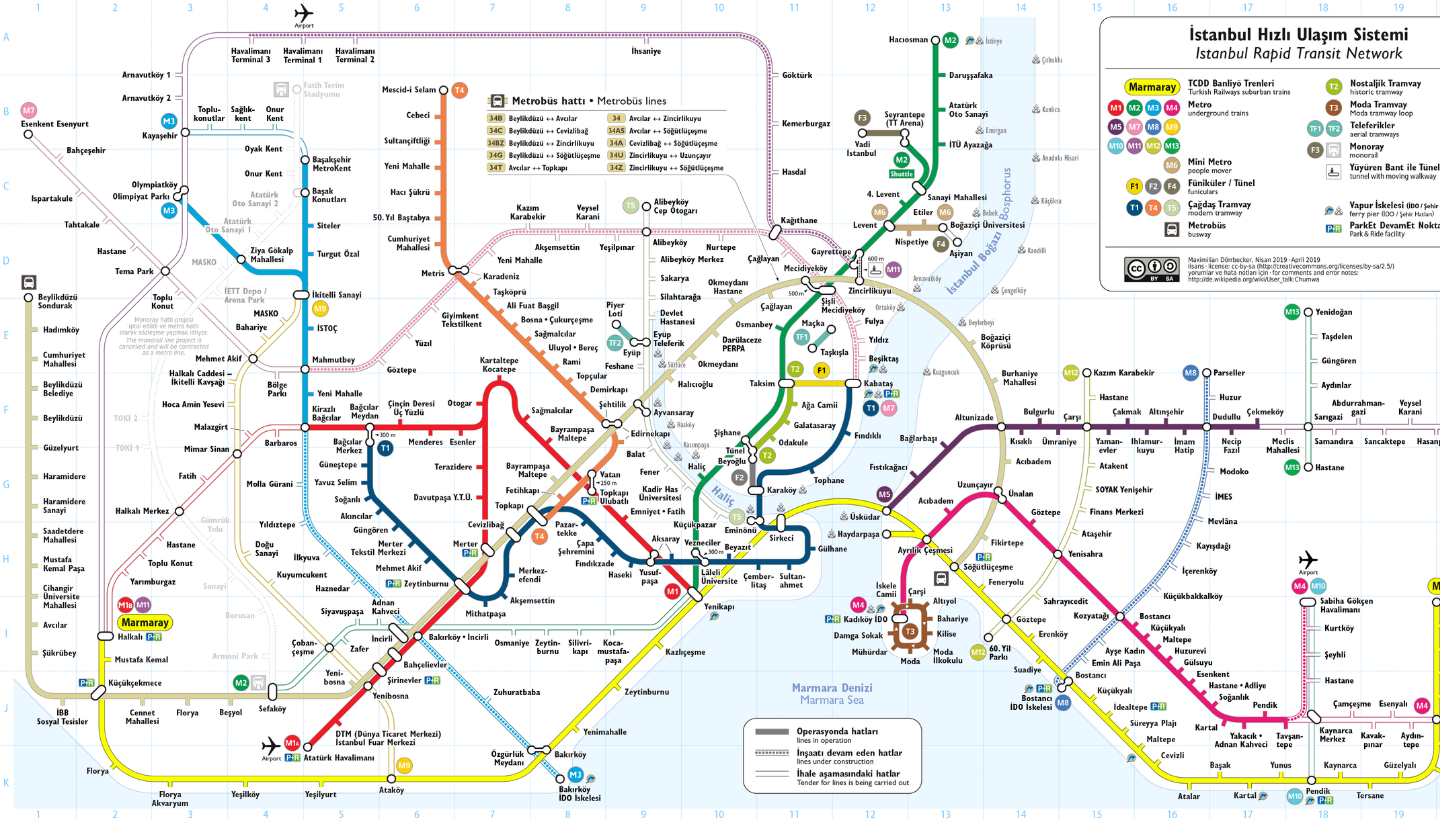
For travelers staying in the historic peninsula, the T1 tram line is often the single most useful piece of the network. It runs directly through Sultanahmet, Beyazıt, and Eminönü, connecting the Grand Bazaar, Hagia Sophia, the Blue Mosque, and the waterfront in one straight line. Trams arrive frequently, especially during the day, and stops are clearly marked in both Turkish and English, making this line an easy starting point for anyone still getting oriented in the city.
The Metro: Fast Travel Across Longer Distances
For trips that stretch beyond the historic core — heading toward the airport, the newer business districts, or across to the Asian side via the Marmaray undersea rail line — the metro is generally the fastest option. Istanbul’s metro network has expanded significantly in recent years, and several lines now connect directly to the airport, cutting what used to be a long taxi ride down to a predictable, traffic-free trip. Metro stations are modern, well-signed, and generally easy to navigate even without much Turkish.
Ferries: Crossing the Bosphorus in Style
One of the more memorable ways to get around Istanbul isn’t underground at all — it’s on the water. Public ferries cross the Bosphorus regularly, connecting the European and Asian sides for the same fare as a tram or bus ride when paid with an Istanbulkart. Beyond simply being functional transportation, the ferry ride itself offers some of the best views in the city, with the skyline, palaces, and bridges visible from the open deck. It’s a favorite among both locals commuting to work and visitors looking for an easy, scenic way to see the Bosphorus without booking a dedicated tour.
Buses and Dolmuş: Filling in the Gaps
For areas the metro and tram don’t quite reach, Istanbul’s extensive bus network fills in the gaps, also accepting the Istanbulkart. Shared minibuses known as dolmuş are another common sight, running fixed routes and departing once enough passengers board — a distinctly local way to travel, though one that requires a bit more familiarity with the city to use confidently. For most short visits, sticking to the tram, metro, and ferry covers the vast majority of tourist routes without needing to rely on buses or dolmuş at all.
Getting From Laleli to Everywhere Else
Staying in Laleli puts you within easy reach of the T1 tram line, making it simple to reach Sultanahmet, the Grand Bazaar, and the waterfront without needing a taxi for most day-to-day sightseeing. For guests planning their first day in the city, understanding how to move between the airport and the Old City efficiently sets the tone for the rest of the trip — something we cover step by step in our guide on how to get from Istanbul Airport to the Old City. Once you’ve settled in, the same transportation network makes it easy to reach the landmarks covered in our guide to the top 10 must-see landmarks near Sultanahmet.
Planning Your Routes in Advance
Istanbul’s traffic can be heavy at certain times of day, which makes rail and ferry options more reliable than road travel for sticking to a schedule. If you’re mapping out a multi-day visit, it’s worth building your route around the tram and metro lines from the start rather than adjusting on the fly — an approach that pairs well with the day-by-day structure in our perfect 3-day itinerary in Istanbul.
Final Thoughts
Istanbul’s public transportation looks complicated on a map, but in practice it comes down to one card and a handful of lines that cover almost everywhere a visitor needs to go. Once you’ve got your Istanbulkart in hand, getting from a quiet morning in Laleli to a sunset ferry crossing on the Bosphorus is far simpler than it first appears.