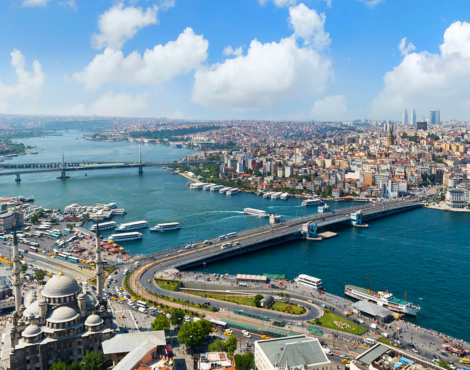
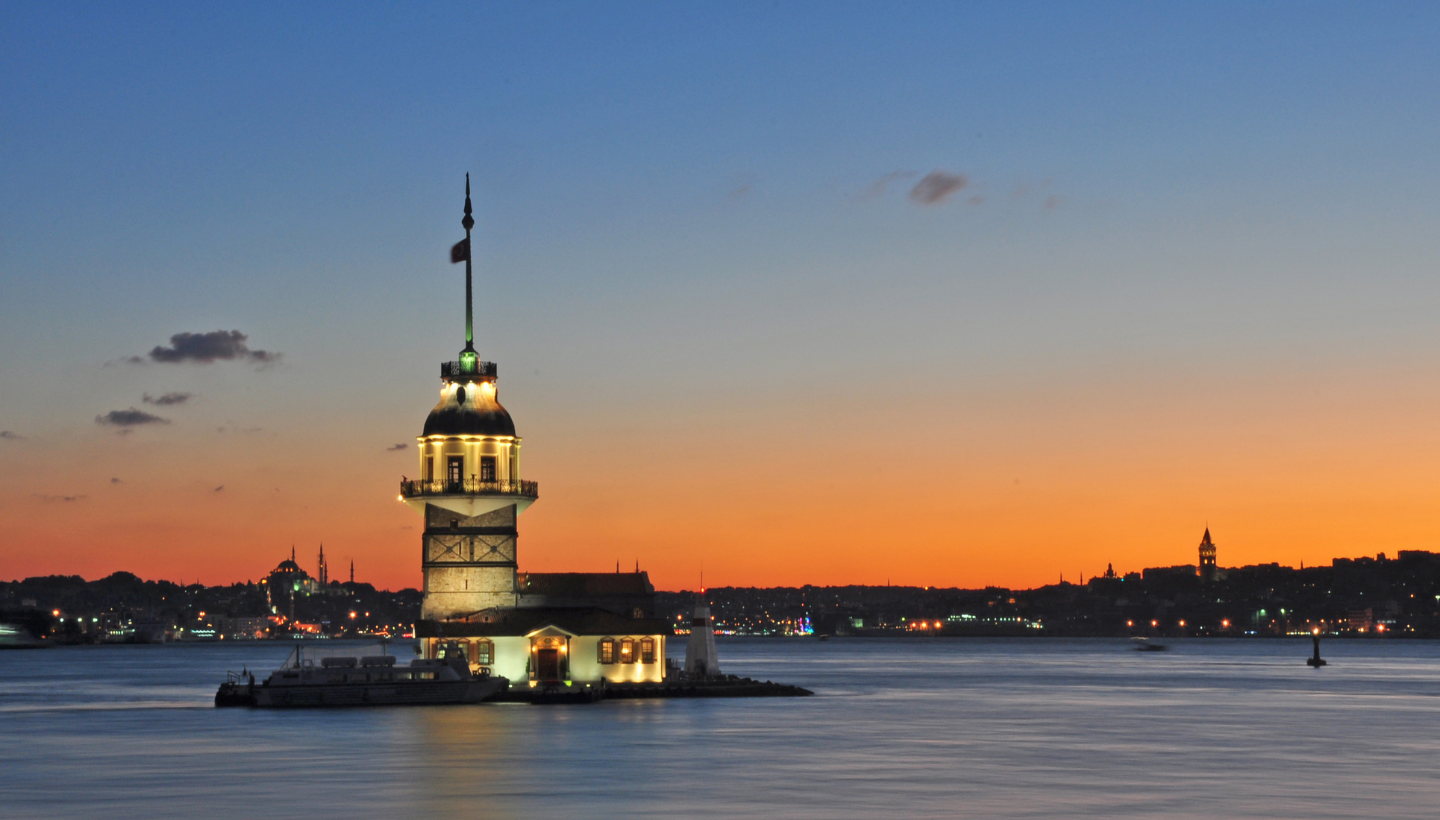
Standing gracefully on a small islet at the southern entrance of the Bosphorus, the Maiden’s Tower is one of Istanbul’s most recognizable and poetic landmarks. Visible from both the European and Asian shores, this solitary structure has watched over the city for centuries—serving, at different times, as a watchtower, lighthouse, quarantine station, and cultural symbol.
More than a monument, Maiden’s Tower is a convergence of history, geography, and legend. Its location at the crossroads of maritime routes has given it strategic importance, while the stories woven around it have made it an enduring icon in Istanbul’s collective memory.
What Is Maiden’s Tower and Where Is It Located?
Maiden’s Tower is located on a tiny islet in the Bosphorus, just 200 meters off the coast of Üsküdar on Istanbul’s Asian side. It sits near the point where the Bosphorus opens into the Sea of Marmara, making it a natural marker for maritime traffic entering and leaving the strait.
Key Technical Facts
- Distance from shore: approx. 200 meters
- Structure: stone tower on a fortified base
- Function today: museum and cultural site
- Access: boat service from Üsküdar and Kabataş
Its compact scale contrasts with its outsized presence in Istanbul’s skyline—proof that location and symbolism can matter as much as size.
Early History: From Ancient Foundations to Byzantine Times
The origins of Maiden’s Tower date back to antiquity. Ancient sources indicate that a defensive structure existed here as early as the 5th century BC, during the era of Greek city-states controlling Bosphorus trade routes. The islet was used to levy taxes on ships passing through the strait—an early sign of its strategic role.
During the Byzantine period, the tower evolved into a maritime control point and lookout post protecting Constantinople’s southern approaches. It was also used as a lighthouse, guiding ships through the busy waters between the Black Sea and the Mediterranean.
Maiden’s Tower Under Ottoman Rule
After the Ottoman conquest of Constantinople in 1453, the tower continued to play a practical role. The Ottomans rebuilt and reinforced it multiple times, adapting it to changing needs.
Main Ottoman Uses
- Defense and surveillance of Bosphorus traffic
- Lighthouse for navigation
- Quarantine station during cholera outbreaks in the 19th century
The structure visible today largely reflects Ottoman-era renovations, particularly those from the 18th century. Despite fires and earthquakes—common threats in Istanbul—the tower was consistently restored, underscoring its importance to the city.
Legends of Maiden’s Tower: Myth and Meaning
While its history is well documented, Maiden’s Tower is equally famous for the legends surrounding it. These stories, though not historically verifiable, are deeply rooted in Istanbul’s cultural heritage.
The Princess and the Snake
The most famous legend tells of an emperor who learned that his beloved daughter would die from a snake bite. To protect her, he placed her in a tower isolated from land. However, a snake hidden in a basket of fruit eventually reached her—fulfilling the prophecy.
This tale gave rise to the name “Maiden’s Tower”, symbolizing fate and inevitability.
The Love Story Across the Bosphorus
Another popular legend connects Maiden’s Tower with the Galata Tower. According to folklore, Galata Tower sent letters across the water to express his love, but the two towers were forever separated—turning them into symbols of longing and distance.
These legends, though symbolic, add emotional depth to the tower’s physical presence.
Architectural Features and Design
Maiden’s Tower has a compact yet elegant architectural form. Built primarily of stone, it consists of:
- A square base resting on the islet
- A cylindrical tower rising above
- A small balcony and lantern section at the top
Its design reflects functional maritime architecture rather than monumental grandeur—every element serves a purpose, from visibility to durability against strong currents.
Maiden’s Tower in the Modern Era
In the 20th and 21st centuries, Maiden’s Tower transitioned from a functional maritime structure to a cultural landmark. After extensive restoration projects, it reopened as a museum and exhibition space, allowing visitors to explore its history while enjoying panoramic views of the Bosphorus and Istanbul’s skyline.
Today, the tower stands as a symbol of:
- Istanbul’s maritime heritage
- The meeting of Europe and Asia
- The city’s ability to preserve history while adapting to modern life
Visiting Maiden’s Tower: Practical Information
How to Get There
- From Üsküdar: frequent boat transfers (short and scenic)
- From Kabataş: seasonal boat services available
Best Time to Visit
- Morning: clear views and fewer crowds
- Sunset: dramatic light over the Bosphorus (highly recommended)
A visit to Maiden’s Tower is often combined with a walk along the Üsküdar coastline, offering one of the most peaceful Bosphorus experiences in the city.
Experiencing Maiden’s Tower from the Old City
For guests staying in Istanbul’s Historical Peninsula, reaching Maiden’s Tower is simple and rewarding. From central districts like Laleli, visitors can:
- Take the tram or metro toward Eminönü
- Cross to Üsküdar by ferry
- Continue with a short boat ride to the tower
This route turns the journey itself into part of the experience—combining ferry views, cityscapes, and the gentle rhythm of the Bosphorus.
After exploring the tower and the Asian shore, returning to the Old City offers a meaningful contrast between Istanbul’s imperial past and its maritime legends.
A Symbol That Transcends Time
Maiden’s Tower is not defined by a single era or story. It has survived ancient empires, medieval sieges, Ottoman reforms, and modern restorations—always adapting, always watching.
To see Maiden’s Tower is to understand Istanbul’s relationship with water, trade, myth, and memory. It remains a solitary guardian of the Bosphorus and one of the city’s most enduring symbols.